
The Myth of the "Algorithm Interview": Why System Design is the New Gold Standard
April 10, 2026
6 min read
I recently spoke with a candidate who had just finished a "standard" interview loop at a tier-1 tech company. He had spent the previous three months memorizing every variation of sliding window and dynamic programming problems known to man. He passed the LeetCode rounds with flying colors.
Then came the System Design round. The prompt was simple: "Design a globally distributed payment gateway with 99.999% availability."
He froze. He could tell you the time complexity of a Dijkstra shortest-path search, but he couldn't explain why he’d choose DynamoDB over PostgreSQL for a transaction ledger or how to handle a partial network partition between US-East and EU-West. He was a brilliant algorithmic problem-solver who had never practiced the art of architectural intuition.
For the last decade, Big Tech has used algorithmic riddles as a proxy for intelligence. But as our systems grow more complex and our tools more automated, the value of being a "human compiler" is plummeting. What matters now is the ability to navigate trade-offs. Can you identify the single point of failure in a serverless pipeline? Do you understand the cost-to-latency ratio of a multi-region CDN?
System design is the ultimate test of seniority because it cannot be solved with a single "correct" answer. It requires context, empathy for the end-user, and a deep understanding of how infrastructure actually behaves in the wild.
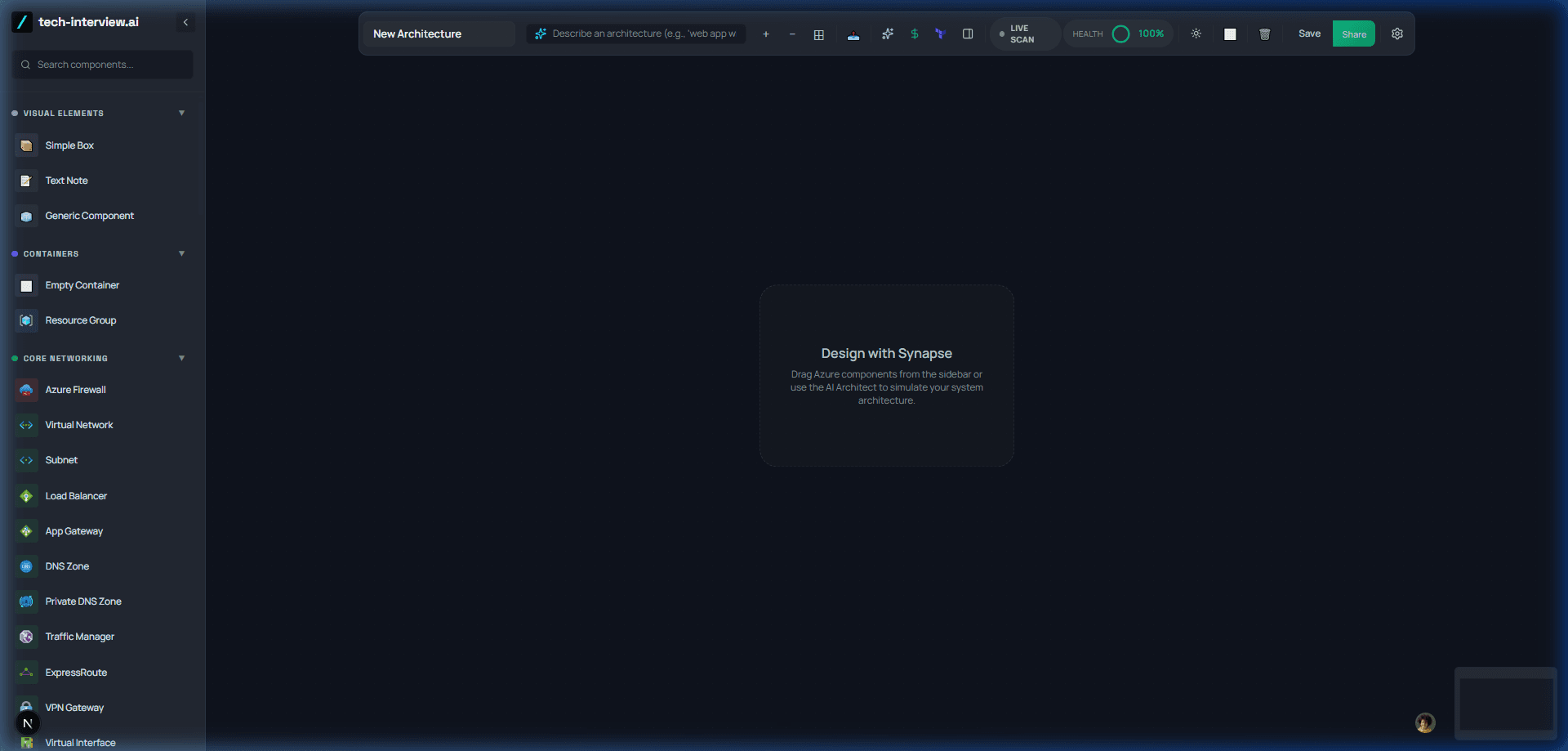
At tech-interview.ai, we believe that the best way to develop this intuition is through practice—real, messy, unpredictable practice. That’s why we built our drawing canvas to be more than just a tool. It's a mirror of the actual work you do as a Staff Engineer.
When you're drawing a diagram, you're not just placing icons. You're mapping out data flow, security boundaries, and scalability bottlenecks. The AI doesn't just watch you draw; it understands the components and pushes back when your design starts to look fragile.
If you're preparing for your next career jump, don't just grind puzzles. Start building. Start designing. The next gatekeeper won't care if you can implement a Red-Black tree from memory—they'll care if you can keep the system running when a whole data center goes dark.